-1.png?width=860&height=350&name=Corgin%2025%20Years%20Primary%20Logo%20Landscape%20(RGB)-1.png)


Quick Answer
The right solution depends on where and how the dust is generated, how mobile the activity is, how much water is available, whether the dust source is fixed or moving, and whether the priority is source control, wider-area suppression or surface dust suppression. MistCannons suit wider airborne dust from crushing, demolition and screening. DustLayers units suit localised loading or material handling dust. Installed misting systems suit fixed sources. Whilst DustFast is best suited to unmade haul roads, compounds and surface dust.
What causes dust on construction sites?
Construction dust is usually created when materials are disturbed, broken down, moved or exposed to dry conditions. Common sources include:
- Demolition and breaking
- Crushing and screening
- Cutting and grinding
- Loading and unloading wagons
- Tipping and stockpiling
- Vehicle movements on unmade surfaces
- Dry haul roads and compounds
- Earthworks and ground stabilisation
The key point is that different dust sources need different controls. A MistCannon may be effective for airborne dust from crushing or demolition, but it is not always the right answer for persistent dust from dry haul roads. Equally, a DustFast application will provide long term suppression on an unmade road surface, but is not effective at a loading point or crusher dust suppression.
What should a good dust suppression system achieve?
A good dust suppression system should do more than simply wet the ground. In fact the best solution usually uses water in an efficient manner and doesn’t wet or dampen surfaces unnecessarily. It should help the site team:
- Reduce airborne dust at or close to the source
- Support health and safety controls
- Reduce dust nuisance beyond the working area
- Help maintain compliance with site requirements
- Reduce disruption from complaints or stoppages
- Use water efficiently where possible
- Fit around changing site operations
- Be simple to deploy, move and maintain
For many construction sites, the most effective approach is to combine more than one dust control method. For example, a site may use a MistCannon Ranger for wider-area airborne dust, a DustLayer for a loading point and DustFast for haul road dust suppression.
On construction sites in particular, a dynamic and changing environment means that dust sources, and therefore the solution, changes as the project progresses through its various stages.
The BEST dust suppression solutions FOR Construction Sites
1. Mobile mist cannon systems
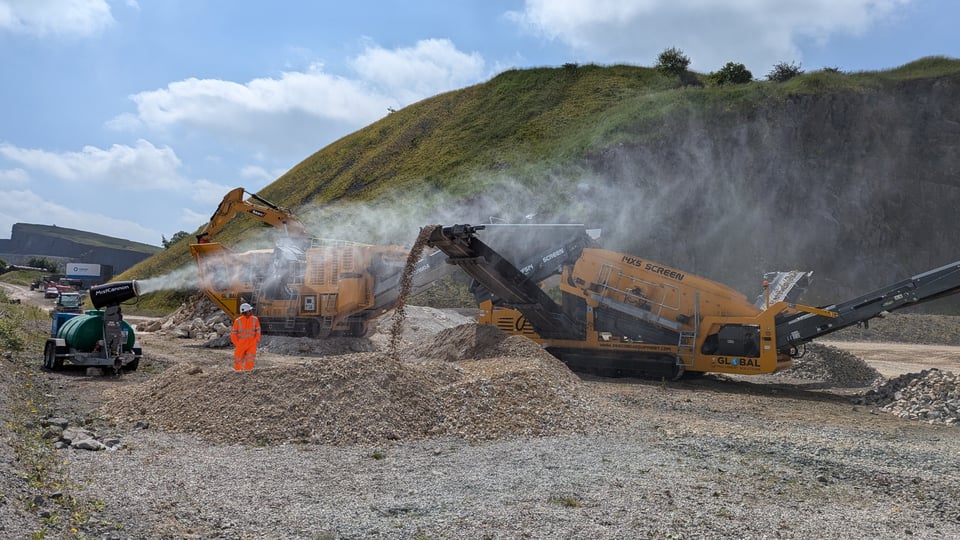
Mobile mist cannons are often used where dust is being generated across a larger working area, or where activities move around the site. They project fine water mist into the air, helping to capture dust particles and bring them down before they spread.
At Corgin, the MistCannon Ranger is designed as a self-contained, mobile dust suppression unit for rapid deployment and relocation. Features include an 30-40m throw range, an automated 340 degree oscillation function, adjustable vertical tilt and remote control, offering the user flexibility and key performance benefits over alternative mobile mist cannons.
Best suited to:
- Crushing and screening
- Demolition
- Large open working areas
- Stockpiles
- Moving dust sources
- Sites needing hire-based flexibility
Things to consider:
Mist cannons work best when they are positioned correctly in relation to the dust source, wind direction and site layout. The aim should be to intercept dust as close to the source as possible, rather than simply misting the general area.
2. Mobile localised systems
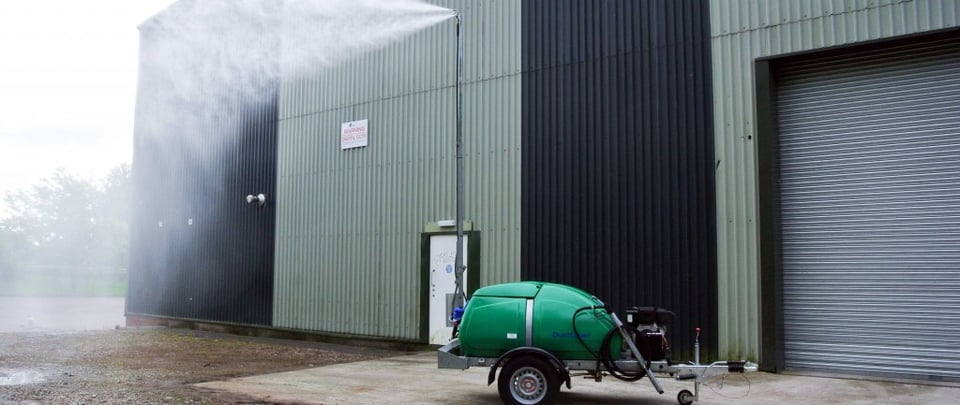
For localised dust sources, a more targeted solution is preferred. Corgin’s DustLayer is as an easy-to-deploy, self-contained, mobile dust suppression unit that uses an extendable (up to 5.3m) and rotatable mast with integrated water tank, producing a 10-12m throw range.
This type of unit can be useful where dust is concentrated in one operational area, but where a fully installed system is not required.
Best suited to:
- Loading and unloading areas
- Material handling points
- Localised dust hotspots
- Temporary works
- Remediation sites
- Areas where simple deployment is important
Things to consider:
DustLayer units are best considered as targeted dust control tools. They can be especially valuable where a site has a known dust hotspot that needs practical suppression without installing a permanent system.
3. Installed systems for fixed dust sources
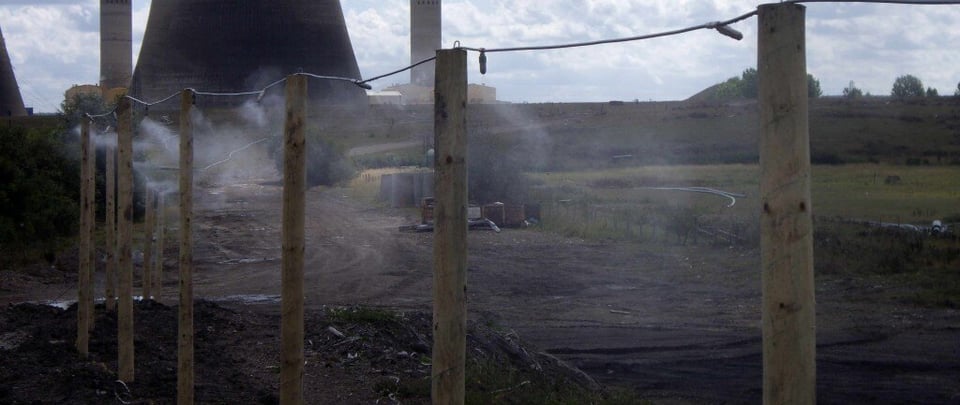
Where a dust source is fixed or semi-permanent, an installed system may be a better long-term option than repeatedly moving mobile equipment. Corgin’s Atomister installed dust suppression systems are positioned for permanent and semi-permanent applications where the dust source is relatively static, including indoor applications.
Installed systems can be particularly useful around process areas, transfer points, loading bays, waste handling areas, industrial operations and construction-related facilities where the dust issue is ongoing.
Best suited to
- Fixed processing areas
- Indoor dust sources
- Loading bays
- Material transfer points
- Semi-permanent construction operations
- Sites needing consistent dust control
Things to consider
Installed systems need more planning than mobile equipment. Water supply, power, layout, pipework, spray positioning, drainage and maintenance access should all be considered before installation.
4. DustFast for haul road dust suppression
Haul road dust suppression is a different challenge. On unmade roads and dry compounds, dust is often generated by repeated vehicle movements rather than a single process.
Water bowsers are commonly used, but they may require repeated passes, regular labour and significant water use, particularly during dry weather. On busy sites, this can become inefficient and disruptive.
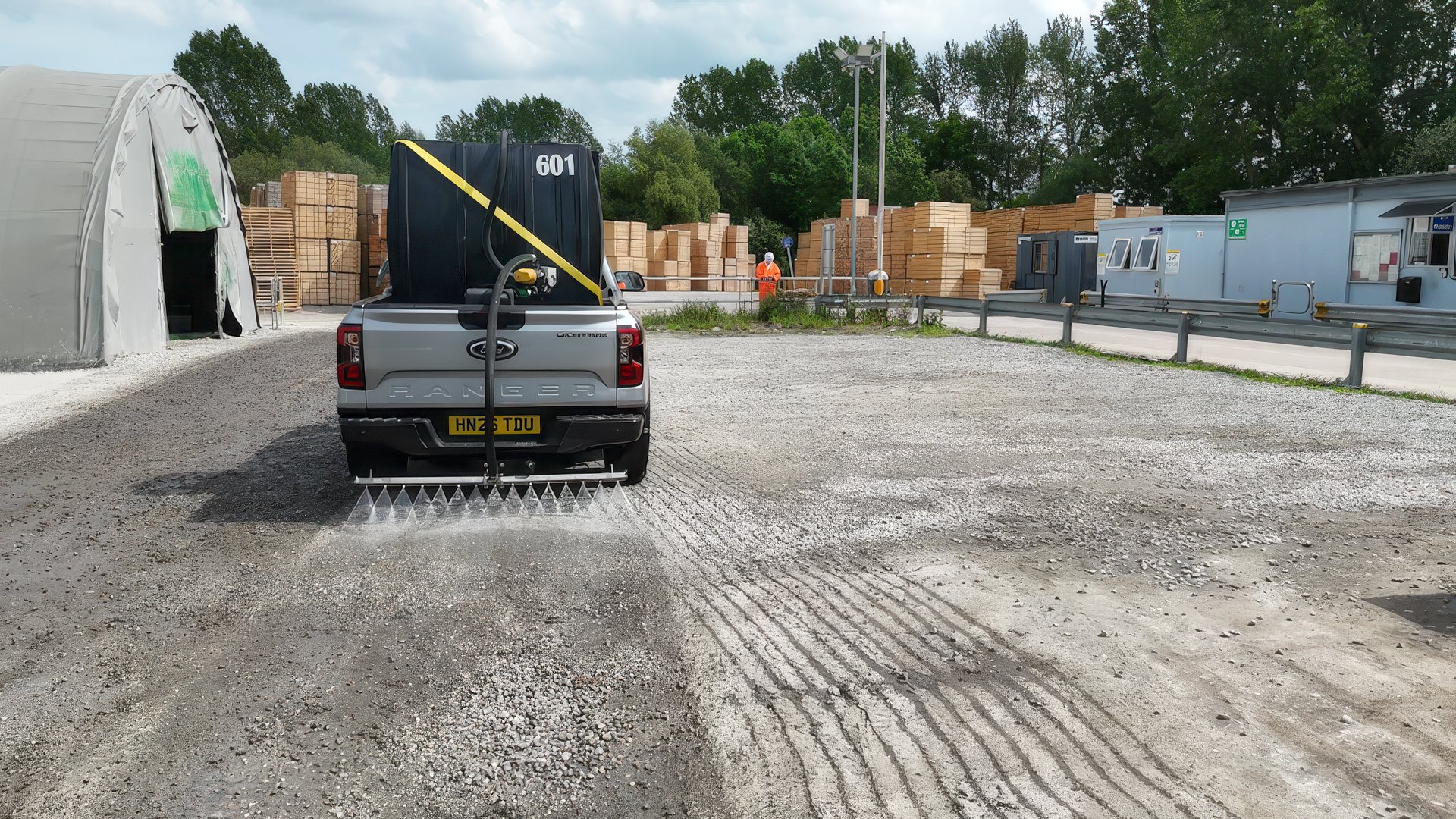
DustFast is Corgin’s long-term dust suppressant for unmade surfaces and haul roads. DustFast is a long-term dust suppressant fluid, with UK environmental regulatory approval and a status of being non-hazardous to groundwater.
DustFast works by adsorbing onto loose surface particles and weighing them down, reducing their ability to become airborne without forming a crust or evaporating.
For suitable sites, a surface treatment can last up to 16 weeks and reduces reliance on constant watering. Performance and reapplication frequency will depend on conditions such as traffic volume, surface type, weather, drainage and application quality.
Best suited to
- Unmade haul roads
- Compounds
- Access roads
- Yards
- Quarries and earthworks areas
- Sites looking to reduce repeated bowser use
Things to consider
Surface suppressants should be matched to the site conditions. Before specifying a treatment, Corgin will confirm the surface type, traffic load, drainage, environmental constraints and expected project duration, to ensure DustFast is the right solution.
How do water bowsers compare?
Water bowsers are simple, familiar and widely available. For some short-term or low-risk situations, they may be enough.
However, they can become less efficient when dust returns quickly, when vehicles are constantly moving, or when labour and water availability are under pressure. Over-watering can also create mud, tracking, surface damage or run-off issues.
The main limitation is that water usually provides temporary suppression. For persistent haul road dust, a longer-lasting suppressant such as DustFast may be more practical, depending on site conditions.
How to choose the right construction dust suppression system
1. Identify the dust source
Start by mapping where dust is actually being generated. Is it coming from a crusher, loading activity, demolition face, haul road, stockpile or general vehicle movement?
The closer you can control dust to the source, the better the result is likely to be.
2. Decide whether the source is fixed or moving
If the dust source moves regularly, a mobile system such as a MistCannon Ranger or DustLayer may offer more flexibility.
If the source is fixed, an installed AtomisterAiro-style system may provide more consistent control.
3. Consider the surface
For haul roads, yards and compounds, airborne misting may not solve the root cause. A surface suppressant such as DustFast may be more suitable for reducing dust generated by vehicle movements.
4. Review water and labour requirements
Dust suppression is not only about the equipment cost. Sites should also consider the ongoing cost of water, labour, fuel, downtime, maintenance and supervision.
A lower-cost option can become expensive if it needs constant attention.
5. Check compliance and stakeholder requirements
Dust control should support the site’s health, safety and environmental responsibilities. Depending on the project, this may include COSHH assessments, planning conditions, environmental management plans, client requirements, neighbour complaints processes and occupational hygiene monitoring.
6. Plan for changing site conditions
Construction sites change quickly. A dust control plan that works during early earthworks may not be right for demolition, crushing, fit-out or final surfacing. The best approach is often a flexible mix of methods.
Speak to Corgin about construction dust suppression
If dust is creating health, compliance, operational or nuisance risks on our site, Corgin can help assess the issue and recommend a practical dust suppression approach.
Our team can support with mobile dust suppression equipment, installed systems and haul road dust suppression options, depending on the site layout, dust source and project requirements.
To discuss the right solution for your site, contact Corgin or request a quote.
Key takeaways
- Construction dust control should start with the source of the dust.
- MistCannons are useful for wider airborne dust from activities such as crushing, screening and demolition.
- DustLayer is suited to localised dust hotspots, including loading and material handling.
- Installed systems are better for fixed or semi-permanent dust sources.
- DustFast can support haul road dust suppression and reduce reliance on repeated watering.
- The right solution depends on site layout, activity, water availability, compliance needs and operating conditions.
FAQs
What is construction dust suppression?
Construction dust suppression is the process of controlling dust created by activities such as demolition, cutting, crushing, loading, earthworks and vehicle movements. It usually involves water misting, surface treatment, extraction, containment or a combination of controls.
What is the best dust suppression method for haul roads?
For haul road dust suppression, repeated watering can work temporarily, but it may require frequent labour and water. A surface suppressant such as DustFast may be more suitable for unmade haul roads where longer-lasting control is required, subject to site conditions.
Are MistCannons suitable for construction sites?
Yes, MistCannons can be suitable for construction sites where airborne dust is generated across a wider area, such as demolition, crushing, screening or stockpile activity. Positioning, wind direction and access to water and power should be considered.
When should we use an installed dust suppression system?
An installed system is usually best when the dust source is fixed or semi-permanent, such as a loading bay, transfer point or indoor process area. It can provide more consistent control than repeatedly moving mobile equipment.
Is water enough for construction dust suppression?
Water may be enough for some short-term or low-risk situations. However, it can be inefficient where dust returns quickly, where water use is high, or where haul roads need repeated treatment throughout the day.
Does dust suppression help with compliance?
Dust suppression can support compliance by helping to reduce exposure, nuisance and environmental risk. However, it should form part of a wider site dust management plan, including assessment, control, review and any required monitoring.
Can one system control all construction dust?
Usually not. Most sites have multiple dust sources, so the best approach is often a combination of mobile misting, localised suppression, installed systems and haul road treatment.


Share This Post
LinkedIn Facebook Twitter Google Plus Email