-1.png?width=860&height=350&name=Corgin%2025%20Years%20Primary%20Logo%20Landscape%20(RGB)-1.png)


As Corgin celebrates 25 years in business, it feels like the right time to pause and reflect. Not just on the milestones, projects, products and growth, but on the lessons learned along the way.
Every business has its own story. Ours has been shaped by people, customers, challenges, mistakes, opportunities and plenty of moments where we had to learn quickly. Some lessons came through success. Others came through things not going quite to plan. But together, they have helped shape the company we are today.
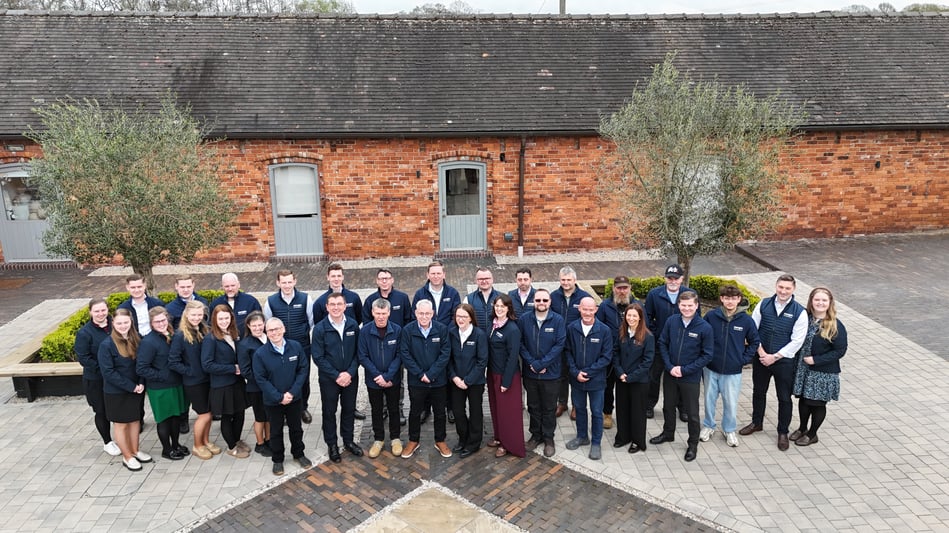
Here are some of the lessons that have stood out across Corgin’s journey so far...
1. The strength of a team is the strength of its culture
Products, systems and processes all matter, but culture is what holds everything together. It shapes how people communicate, respond under pressure, support one another and look after customers.
A strong culture is built through consistent behaviours, shared standards and a genuine sense of care. When a team feels trusted, valued and aligned, it shows in the way they work.
2. Look after your team and your team will look after your customers
Customer experience starts with team experience. When people feel supported, they are better able to support customers.
The extra phone call, the late finish, the willingness to help and the desire to solve a problem properly all come from people who care.
3. You can’t buy discretionary effort
You can pay for time, but you cannot buy genuine commitment. Discretionary effort comes when people believe in what they are doing and feel part of something worthwhile.
That willingness to go the extra mile has been one of the defining strengths of Corgin’s journey.
4. Honesty buys trust
Things will not always go perfectly, but honesty builds credibility. Customers value clarity, ownership and openness, especially when challenges arise.
Being upfront, taking responsibility and communicating clearly helps build long-term trust.
5. Don’t be afraid to try
Progress rarely comes from waiting until every answer is guaranteed. Growth requires ideas to be tested, risks to be taken and new approaches to be explored.
Trying something new is often the first step towards meaningful improvement.
6. Fail fast, learn fast
Not every idea will work first time. The important thing is to recognise this quickly, learn from it and adapt.
When failure is treated as feedback, it becomes a useful part of progress.
7. Focus on the learning, not the failure
The most important question is not “what went wrong?” but “what can we learn?”
This mindset helps turn setbacks into improvements and keeps the focus on progress rather than blame.
8. Never walk past problems
Small issues rarely stay small if they are ignored. Whether it is a process gap, a customer frustration or something that does not feel right, it is always better to address it early.
Improvement starts by noticing problems and taking responsibility for solving them.
9. A leader’s role is to set the tone
Leadership is about more than direction. It is about setting the tone, sharing the vision, creating alignment, empowering the team, unleashing talent and clearing the path.
Good leadership helps people understand where we are going, why it matters and how they can contribute.
10. Starting small needn’t be a disadvantage
Starting small can create resourcefulness, closeness to customers and a willingness to get stuck in.
It simply means there is more potential for growth, and more opportunity to shape the business with purpose.
11. Rapid growth exposes systemic weaknesses
As a business grows, systems and processes are put under pressure. What worked at one size may not work at another.
Growth is exciting, but it also reveals where stronger structure, communication and consistency are needed.
12. Systemic problems seldom go away by adding more staff.
If a process is unclear or inefficient, more people can sometimes add more complexity.
The better answer is to identify the root cause and improve the way the work is done.
13. Customer issues and complaints are gold
Complaints are never comfortable, but they are valuable. They show where expectations, communication, processes or delivery can be improved.
Handled well, customer feedback becomes one of the best sources of business improvement.
14. Growth during a downturn builds strength
Finding the formula for growth during difficult conditions can propel a business forward when the market improves.
Tougher periods force focus, sharpen decision-making and help reveal where real value is created.
15. Take advice from whoever is generous enough to give it
Good advice can come from customers, colleagues, suppliers, advisers and peers.
Not every suggestion will be right, but listening with humility can reveal insights that help the business improve.
16. Understand where you add value, and focus on that
Strong growth comes from knowing what customers truly value and building around it.
For Corgin, that means focusing on the areas where our solutions, service and expertise make the greatest difference.
17. Know why customers buy from you, then do more of the same
Customers often show us where our value really lies. By understanding why they choose Corgin, we can strengthen what already works.
The goal is not to be everything to everyone, but to do more of what makes us useful, trusted and distinctive.
18. Only offer what you can be the UK’s, or world’s, best at
This is a high standard, but an important one. It encourages focus, ambition and discipline.
If we are going to offer something, we should do it properly, build genuine expertise and aim to be among the very best at it.
Looking ahead
These lessons are not just reflections on the past. They are principles we can carry forward.
They have helped shape Corgin over the last 25 years and will continue to guide us as we grow, improve and support customers who care about clean water and clean air.


Share This Post
LinkedIn Facebook Twitter Google Plus Email